 Shop Remington Skin.

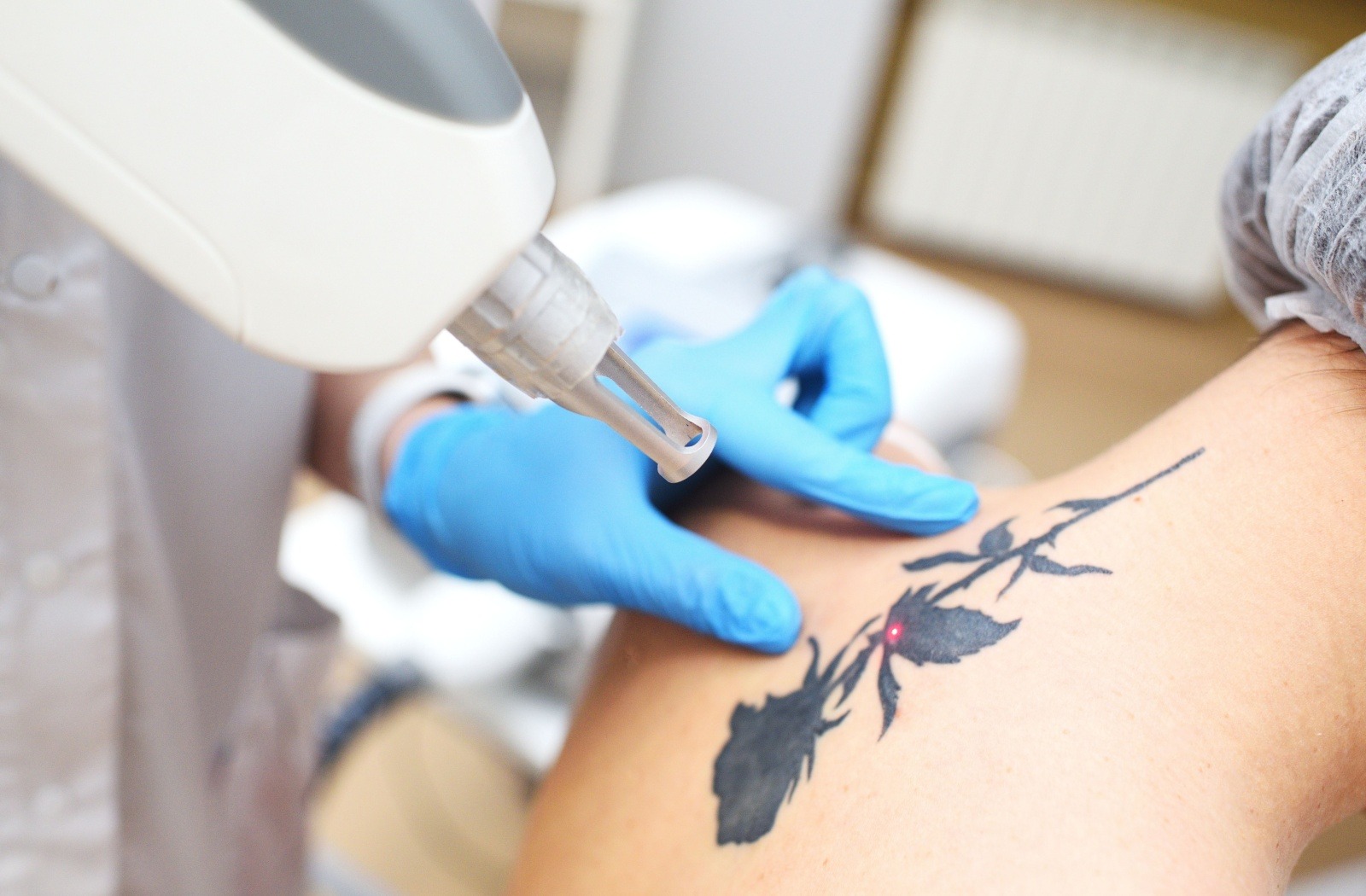
That tattoo seemed like a perfect idea years ago, but now you’re ready for a change. Whether it’s a name from a past relationship or artwork that no longer reflects who you are, you’re not stuck with permanent ink forever.
Laser tattoo removal works by using specialized light energy to shatter ink particles embedded deep in your skin, allowing your body’s natural immune system to gradually eliminate the fragmented pigment over multiple treatment sessions. At Remington Laser Dermatology Centre, multi-wavelength technology makes this process more effective and comfortable than ever before. Understanding how long tattoo removal takes helps you plan your journey to clear skin.
The Science Behind Laser Tattoo Removal
How Laser Light Breaks Down Tattoo Ink
Your tattoo ink sits trapped in the deeper layers of your skin, far below the surface. When a tattoo artist applied that ink, it penetrated through your epidermis into the dermis, where large ink particles became permanently lodged.
Laser energy targets these ink particles with intense, focused light pulses. The laser light passes harmlessly through your skin’s surface but gets absorbed by the tattoo pigment underneath. This absorption causes rapid heating, which shatters the ink particles into much smaller fragments.
Your Body’s Natural Removal Process
Once the laser breaks down those large ink particles, your immune system springs into action. White blood cells called macrophages recognize these smaller ink fragments as foreign material that needs removal.
These cellular cleanup crews engulf the tiny ink pieces and transport them through your lymphatic system. Your body then processes and eliminates the fragmented pigment naturally over the weeks following each treatment. This is why you’ll continue seeing your tattoo fade long after your laser session ends.
Why Ink Colours Respond Differently
Not all tattoo pigments absorb laser light equally. Different colours require specific wavelengths to break down effectively:
- Black ink responds most favourably because it absorbs all laser wavelengths
- Green, red, blue, and yellow inks present more challenges and may need specialized wavelengths
- White and beige inks carry risks of oxidizing and turning permanently black during treatment
The Fotona StarWalker® Multi-Wavelength System
The Fotona StarWalker® represents a significant advancement in tattoo removal technology. This system combines multiple wavelengths and pulse durations in 1 device, allowing for more effective treatment of various ink colours and depths.
Unlike older single-wavelength lasers, this technology can target different pigments more precisely while protecting your surrounding healthy skin tissue.
The 3-Stage Treatment Approach
Your tattoo removal follows a systematic 3-stage process designed for desired results:
- Nano technology breaks large ink particles into smaller fragments deep below the skin surface
- Pico technology further reduces these fragments into microscopic pieces that your body can eliminate more easily
- FRAC TAT technology manages heat release and allows multiple treatment passes in 1 session without excessive skin damage
Why Multiple Wavelengths Matter for Your Results
Think of different ink colours as different types of rocks. Just as you’d need different tools to break granite versus sandstone, various ink pigments require specific laser wavelengths for effective breakdown.
This multi-wavelength approach means your colourful tattoo receives comprehensive treatment in each session, rather than requiring separate appointments for different colours.
What Happens During Your Treatment Session
Pre-Treatment Preparation & Comfort Measures
Your comfort matters during tattoo removal. You’ll apply topical numbing cream to your tattoo area 1 hour before arriving for your appointment.
This anesthetic significantly reduces discomfort during the laser treatment, making the process much more tolerable than you might expect. Professional laser tattoo removal provides proper preparation and professional care throughout your session.
The Laser Treatment Process
During your session, the laser handpiece systematically covers your tattoo area. Each pulse delivers precise energy to shatter ink particles without damaging your skin’s surface.
Treatment time varies based on your tattoo’s size, typically ranging from 15–30 minutes. The laser operator adjusts settings based on your specific ink colours and skin response.
Managing Treatment Sensation
Most people describe the laser pulses as feeling like small electrical shocks, similar to touching a doorknob after walking across carpet. Larger and darker tattoos may cause more noticeable discomfort, but the topical anesthetic helps minimize any pain.
Your Recovery & Healing Timeline
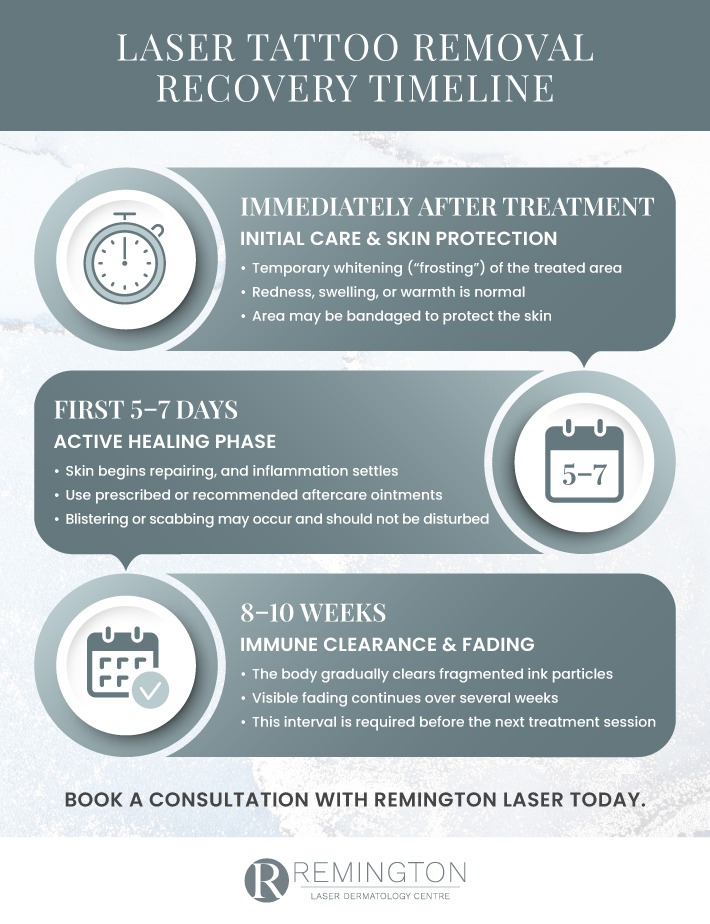
Immediate Post-Treatment Changes
Right after your laser session, you may notice several immediate changes to your treated area:
- Your tattoo appears white or frosted for several minutes
- Swelling develops around the treatment site
- Small pinpoint bleeding may occur in some areas
After a session, a protective dressing will be applied to shield your healing skin during recovery.
First Week After Treatment
Expect swelling and possible blistering for 2–3 days following your treatment. This reaction shows your body is responding appropriately to the laser energy.
You’ll apply a specialized recovery cream, such as Cicaplast gel B5, 2–3 times daily to support proper healing. The initial dressing can remain in place until the next day, then you may change it daily if needed for clothing protection.
Long-Term Healing & Lightening Process
Your tattoo continues fading throughout the 8–10 week healing period between sessions. This extended timeline allows your immune system to process and eliminate as many ink particles as possible before your next treatment.
Complete healing takes 3–6 weeks, during which you’ll see progressive lightening as your body removes more fragmented pigment. This process mirrors how other laser rejuvenation treatments work with your body’s natural healing mechanisms.
Treatment Planning & Realistic Expectations
Factors That Determine Your Treatment Timeline
Several variables influence how many sessions you’ll need, including:
- Your tattoo’s size and location on your body
- How deeply the original artist embedded the ink
- Whether you have professional or amateur work
- Your tattoo’s age and the amount of ink used
- The colours present in your design
Why 8–10 Week Spacing Matters
Rushing between treatments doesn’t speed up your results. Your body needs adequate time to process and eliminate ink fragments before the next laser session can be effective.
This spacing prevents over-treatment of your skin while allowing maximum pigment removal between appointments. Professional dermatology care provides ideal treatment spacing guidance for proper healing.
Complete Removal Versus Significant Fading
Most tattoos require 5–15 treatment sessions for desired results. Unfortunately, predicting exact session numbers proves difficult because every tattoo responds differently.
Some tattoos fade to complete invisibility, while others achieve significant lightening that makes cover-up work much easier. Your dermatologist can provide more specific expectations after evaluating your particular tattoo.
Laser Tattoo Removal You Can Trust
Laser tattoo removal requires experience in both modern technology and dermatological care. When you choose professional treatment, you’re investing in safer procedures and comprehensive support throughout your removal journey.
Ready to start your tattoo removal process? Contact Remington Laser Dermatology Centre to schedule your consultation and learn how our laser technology can help you achieve the clear skin you want.